Plant Powered Pixels

Site menu

The work, under its real name.

These are sites and tools people rely on now. Some are ours to run; the UCLA projects come from Lincoln’s day job, where many of the studio’s standards were learned.


WeHo Temps United

We organize with this union, and we built and run its public site. It carries the campaign’s open letter, membership sign-ups, and the know-your-rights material workers need to find quickly.

A campaign site has to work for someone reading it on a phone between shifts, and it has to change the same afternoon the news does. We run it and we make those changes ourselves, so nothing sits in a queue waiting on somebody else.
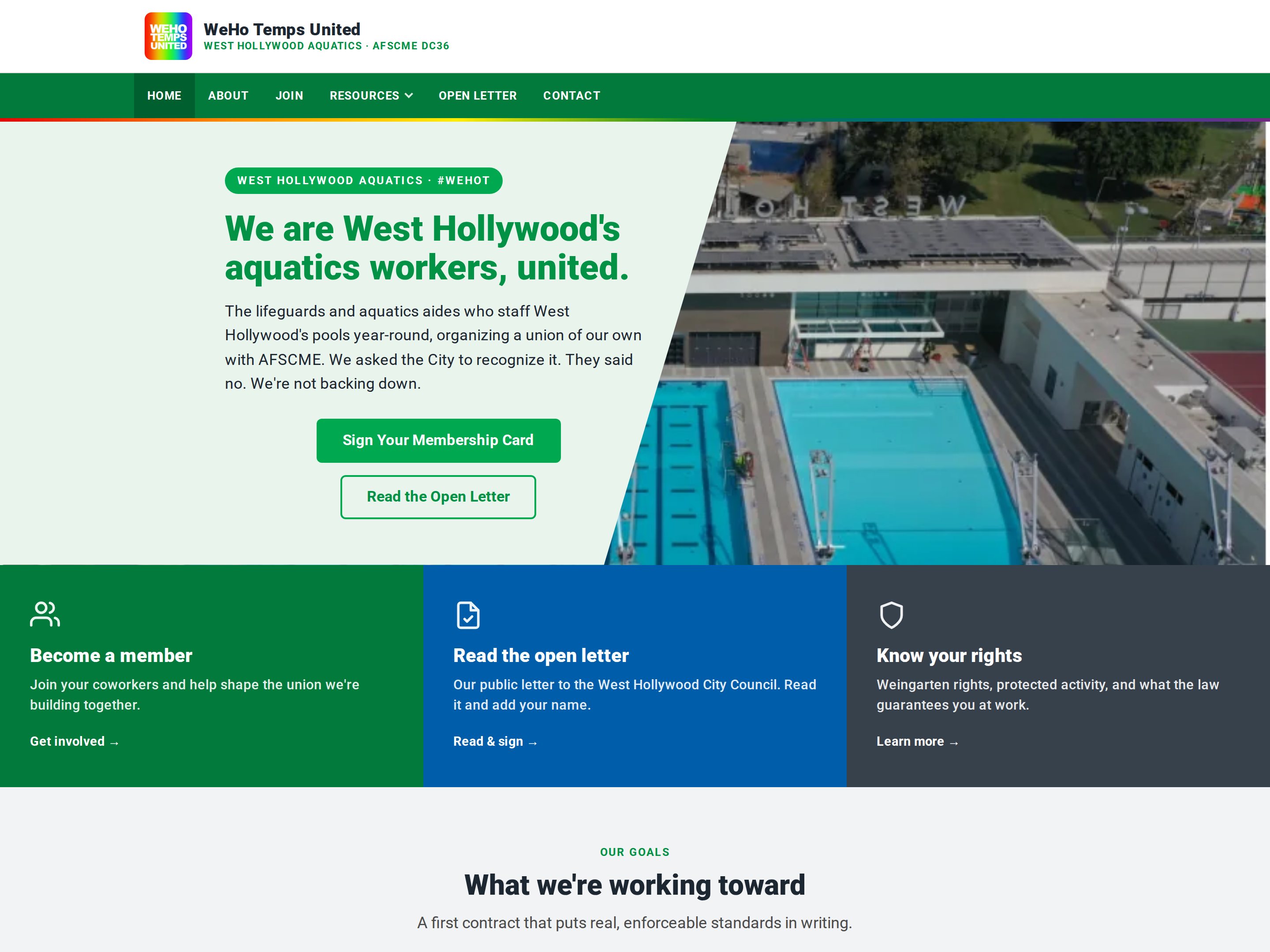
WeHo Temps United homepage: the headline 'We are West Hollywood's aquatics workers, united' beside an aerial photo of the city pool.

The organizing dashboard

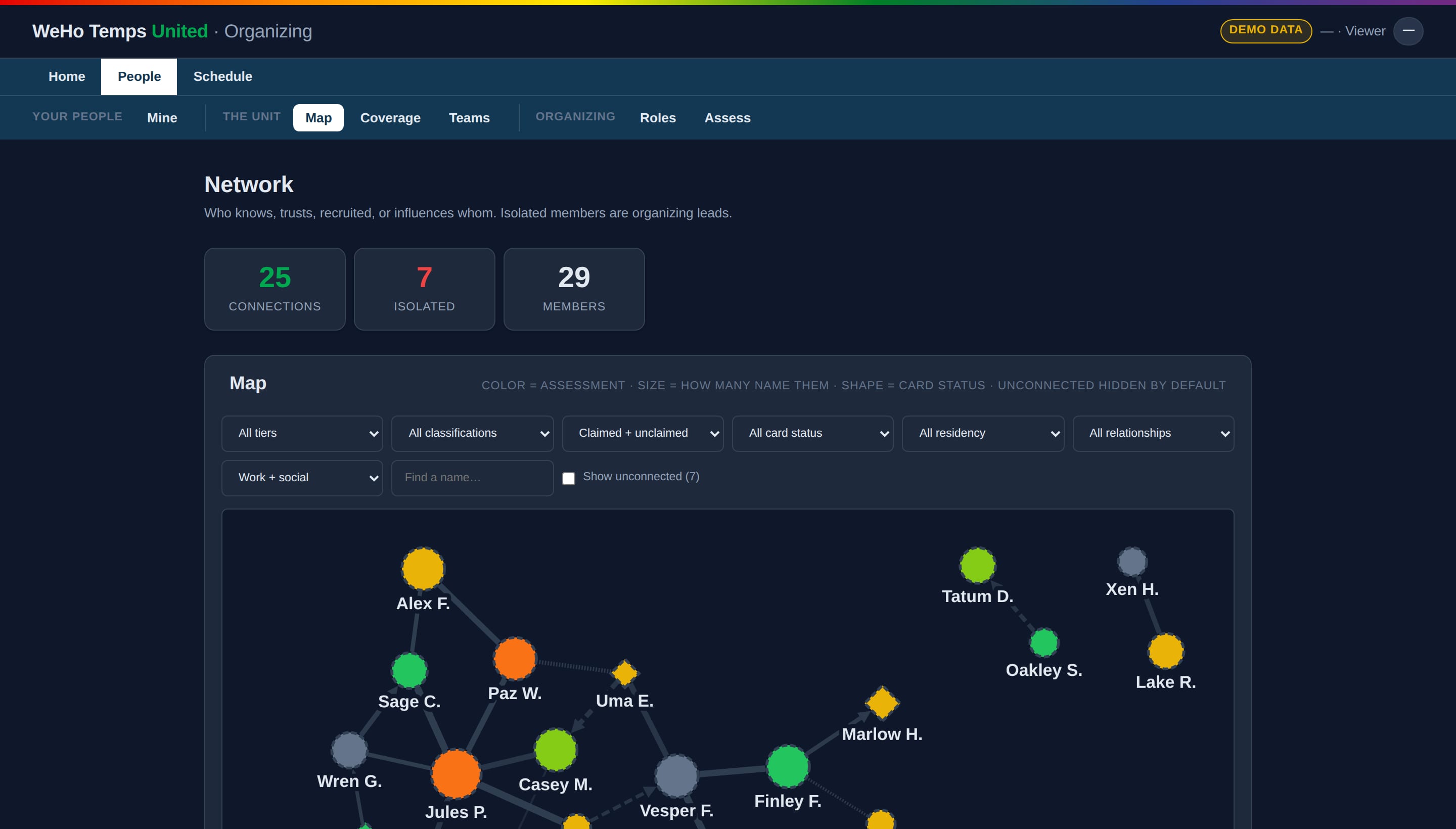
The private side of that same organizing work is a separate dashboard. It shows who is connected to whom, who is covered, and where contact has fallen away. Lincoln built it so the union owns its working data and the screens follow the campaign's real questions.

Every screen comes from a demonstration database of invented people, never the union’s own records.

Organizing dashboard network view: invented members drawn as a map of who knows whom, with filters and a list of members who have no connections yet.

Who knows whom, so an organizer can see where a conversation can actually travel, and who nobody has talked to yet.

Jann's EZ Pet Care

Jann ran a referral business on a phone number and word of mouth. She needed something a new client could find, read, and act on without calling first. We built her a site that puts the inquiry in front of people on any device, and we host it ourselves, on the same server this site runs on.

We built this one free, for a friend, and it is where we worked out how we build small sites now.

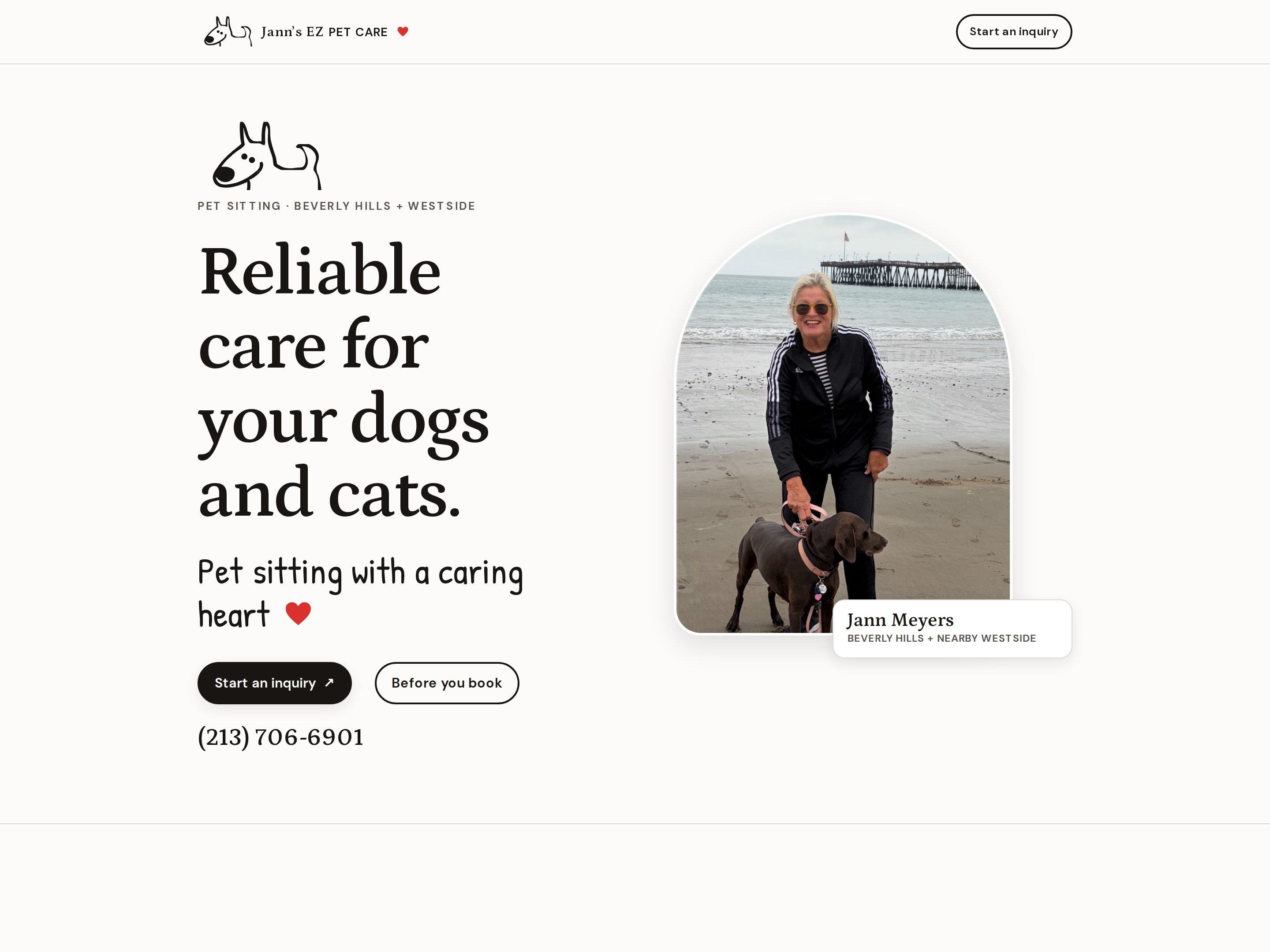
Jann's EZ Pet Care homepage: the headline 'Reliable care for your dogs and cats' beside a photo of Jann walking a dog on the beach.

Lincoln built SUPER and the grant reviewer portal as a staff research associate at UCLA. They belong to the university programs they serve, and they are where our standards for public programs, reporting, and long-lived software come from.

SUPER at UCLA

County staff and youth service providers need to find a prevention program that fits the people they serve. Lincoln builds and maintains the site that lets them filter a library of practices and read what the evidence says about each one.

The same site carried the public CSSA Cohort 2.0 application page. The reviewer portal below handled the private half after applications closed.

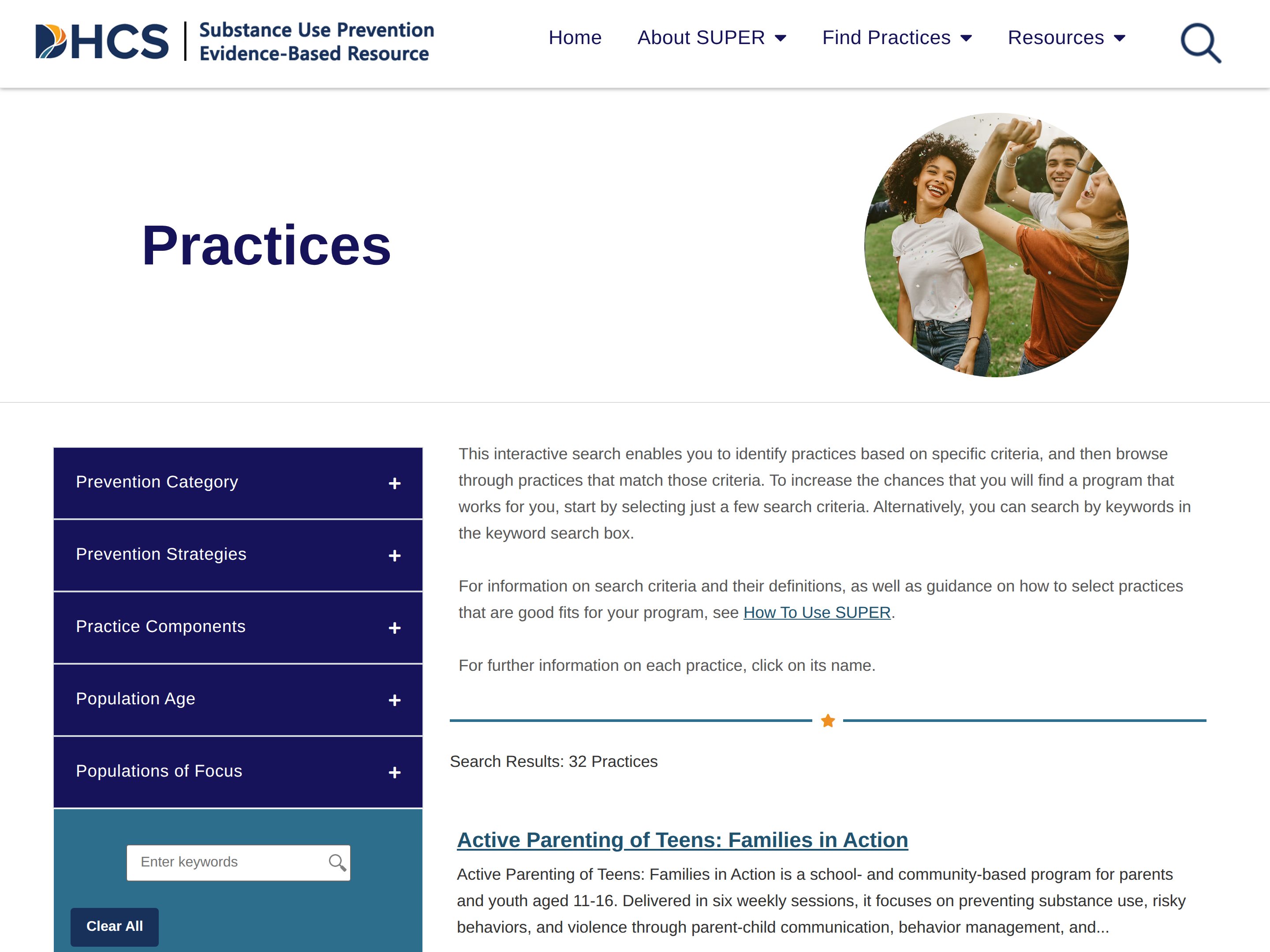
The SUPER practices page: filters for prevention category, strategies, components, and population, beside a list of matching practices.

A grant reviewer portal

A state-funded program had to take in applications and screen them against fixed criteria. It also had to assign reviewers who could only see their own assignments, collect their scores, and settle the cases where two of them disagreed. Lincoln built the portal that runs that process end to end, with an audit trail behind every decision.

The program ran its review on it, start to finish.

Shown with invented applicants and recolored, so no program or applicant material appears here.

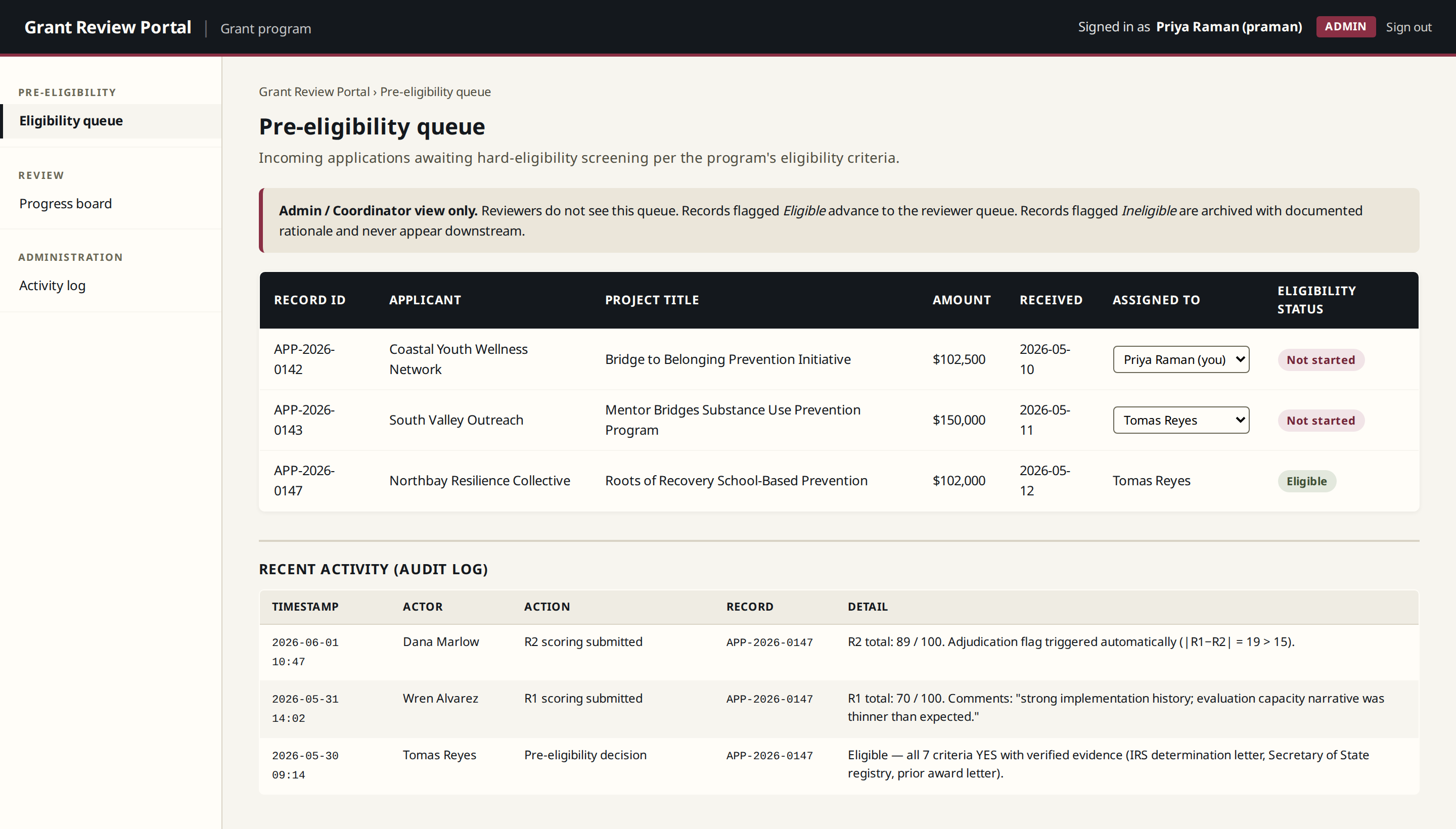
Grant review portal queue: applications with amounts, assignment dropdowns, eligibility status, and an audit log of recent decisions.

Applications arrive, get assigned, and get screened, with every decision written to an audit trail.

Tell us what you're working on.

Start a project