Building from inside an organizing campaign
We organize with WeHo Temps United, so the public site was built from inside the work. It has to give workers the open letter, sign-up path, and know-your-rights material on the phone they already have. It also has to change while a campaign is moving.
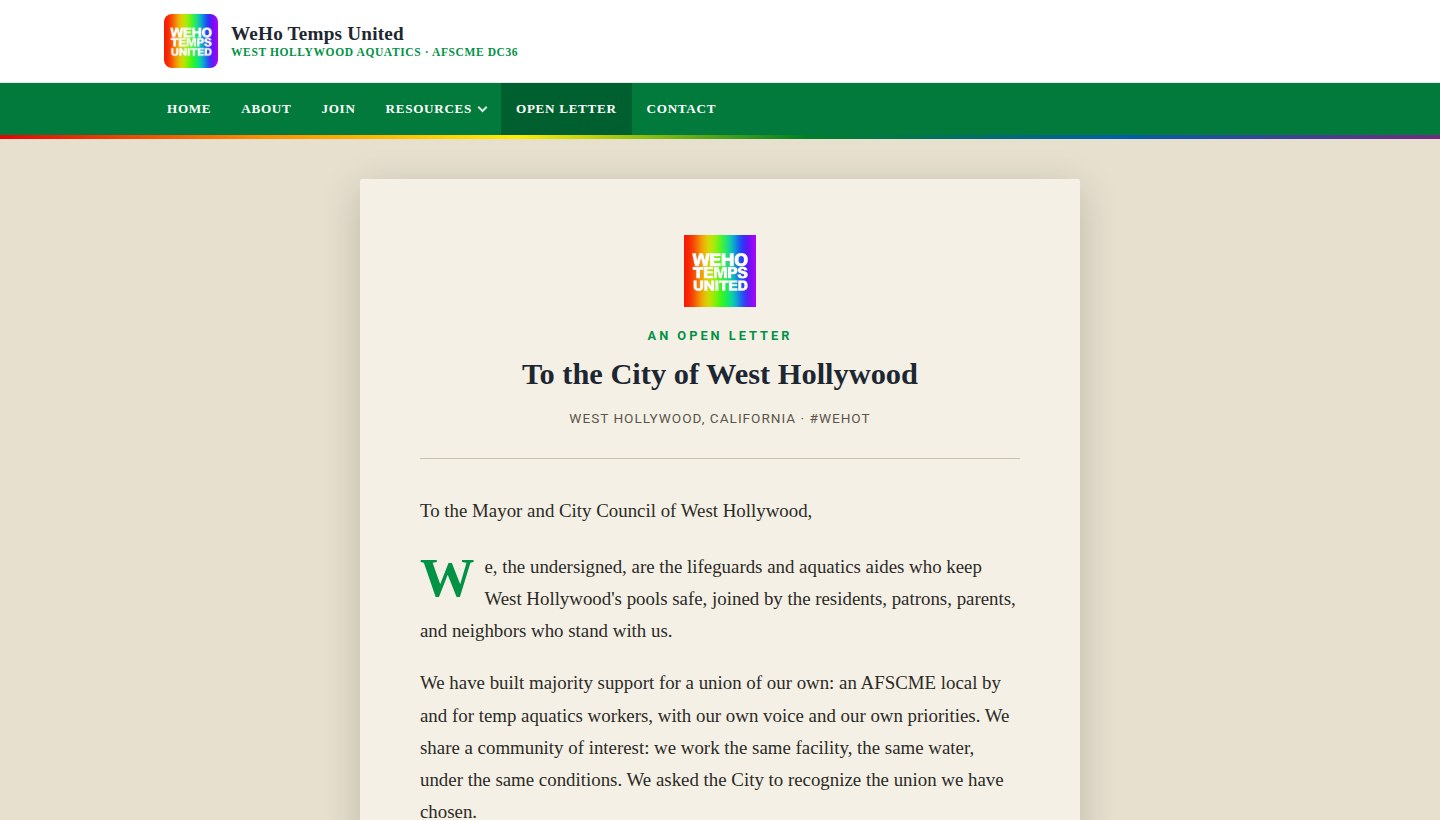
The campaign's public case is written as a letter people can read and sign.
The public page has to work between shifts
A worker may arrive from a text message and read the site on a phone with a few minutes to spare. The page has to say who the campaign is, make the public case plainly, and put the next useful action close at hand.
That pressure shaped the reading order and the amount of material each page asks somebody to carry. The site supports a conversation already happening among workers. This campaign needs speed and clarity. A separate branding exercise would only get in the way.
Changes stay with the organizers
Lincoln and his husband help run the campaign and make all site updates themselves. When public wording, a meeting, or campaign news changes, the people closest to that decision can update the site the same afternoon.
The arrangement is direct because that is what this campaign needs. There is no handoff to a separate content team and no queue between an organizing decision and the public page.
Public information and organizing data have different jobs
The public site carries material workers and community members are meant to share. The organizing dashboard answers a different set of questions: who is connected to whom, where follow-up has fallen away, and what an organizer needs to do next.
Lincoln built that tool separately so the campaign owns its working data and the screens can follow the campaign's actual workflow. A public website never needs access to those records.
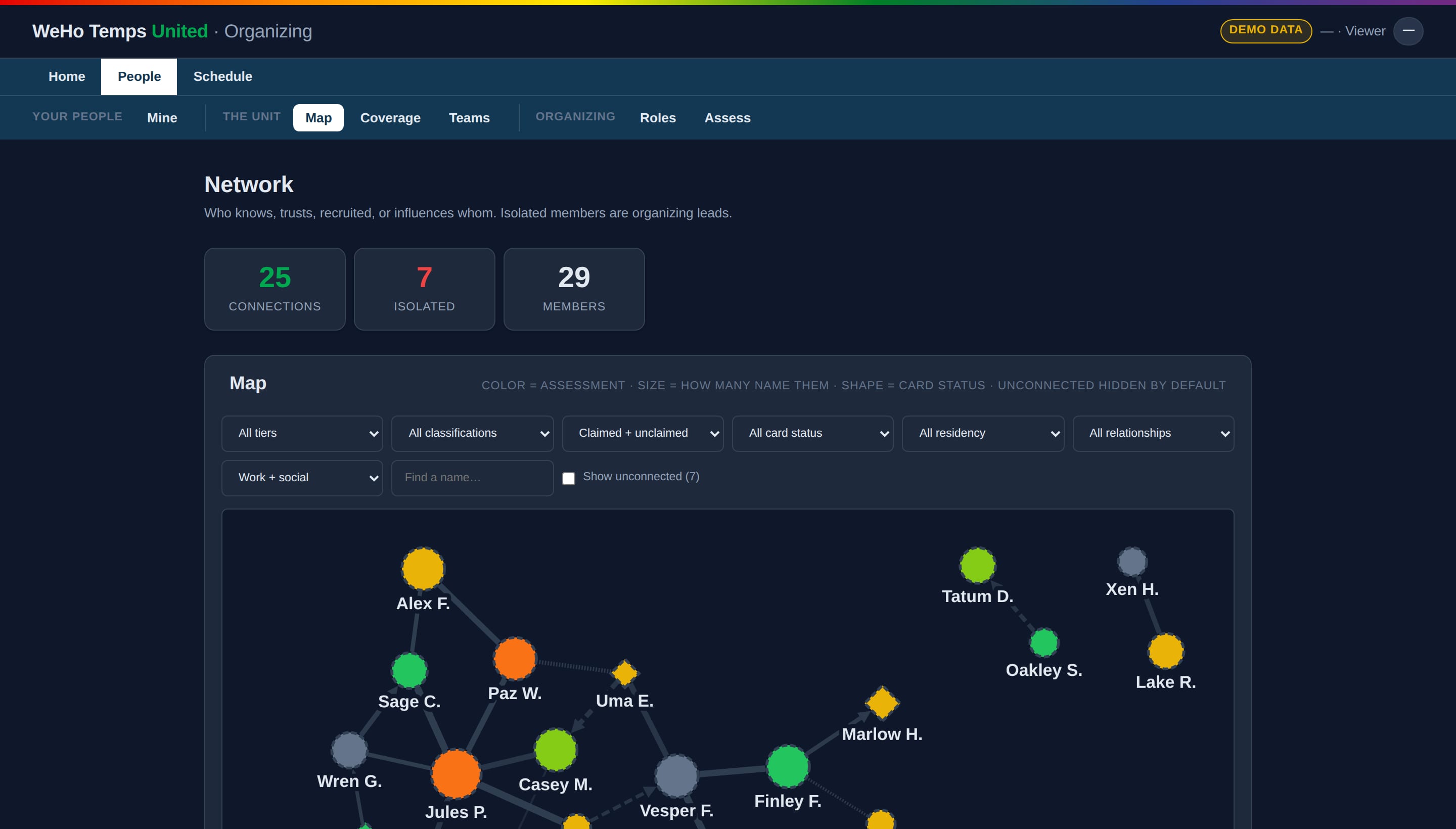
Who knows whom, so an organizer can see where a conversation can actually travel, and who nobody has talked to yet.
Privacy decides what we can show
The dashboard images here come from a separate demonstration database filled with invented people. They contain no member names, schedules, assessments, notes, or campaign strategy. The live tool's address and records stay private; a redacted production screenshot would still reveal more than this case study needs.
Still in use
The public site is live, and the organizing tools remain part of the campaign's day-to-day work. This is our own community organizing, maintained by the people doing the organizing. Workers can reach the public material quickly. Organizers keep it current, while private data stays on its side of the line.