Making one public platform carry very different kinds of work
SUPER already had an accessible page builder and an established editing workflow. It was hard to shape around a growing practices library and a grant opportunity with its own long application page. Lincoln kept the tools staff knew, then built the theme and custom pieces the public work needed.
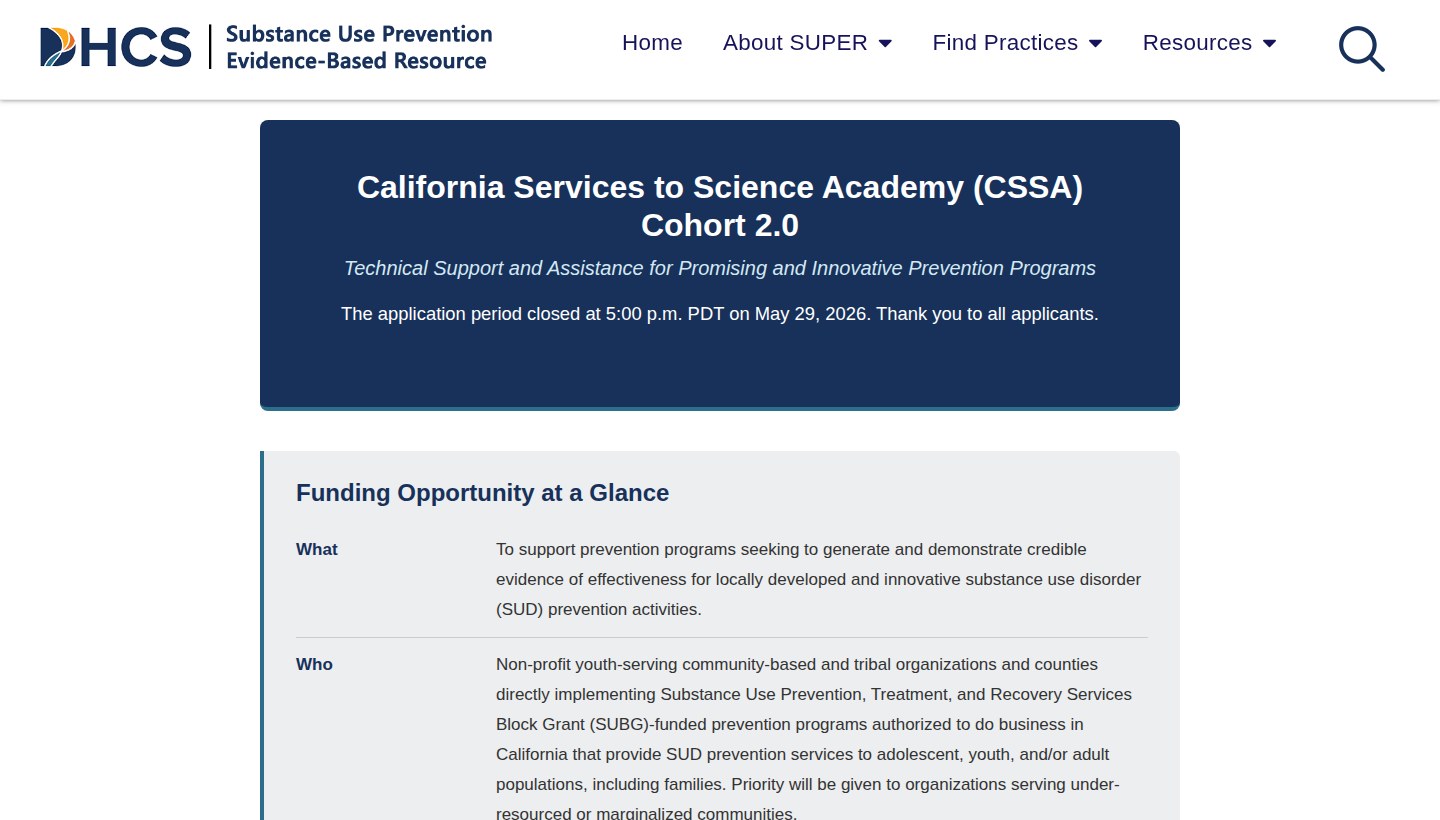
The closed page keeps the opportunity's purpose, eligibility, and public record available.
Lincoln built this work at UCLA
Lincoln performs this work as a staff research associate at UCLA. UCLA owns the program and the site. We include it here as professional experience behind Plant Powered Pixels' standards for public programs, accessibility, and long-lived institutional work.
Keeping the editing workflow
Staff already knew how to build and edit pages in the existing system. A wholesale replacement would have thrown away useful familiarity and moved the difficulty somewhere else.
Lincoln built a custom theme around that system. Staff kept the tools they understood, while the public site gained a coherent presentation and room for pages that did more than the default layout allowed.
One page had to carry the whole opportunity
The California Services to Science Academy (CSSA) Cohort 2.0 opportunity brought the funding summary, eligibility rules, application dates, webinars, accessible files, and a long FAQ into one public page. The state's California Grants Portal listing sent applicants to SUPER for the full requirements and the application itself.
The timeline makes the public dates easy to scan. The FAQ keeps the questions on the page and lets each answer open in place. When applications closed on May 29, 2026, the page changed its lead message and kept the rest available as a public record.
The review started after the public page closed
Applications then moved into a separate reviewer portal. Lincoln built it to assign cases, screen fixed eligibility criteria, collect reviewer scores, and keep an audit trail behind each decision. The public page and the private review tool served the same grant process without exposing applicant records on the website.
These screens use invented applicants and remove the program's marks. They show the review workflow without publishing applicant or colleague information.
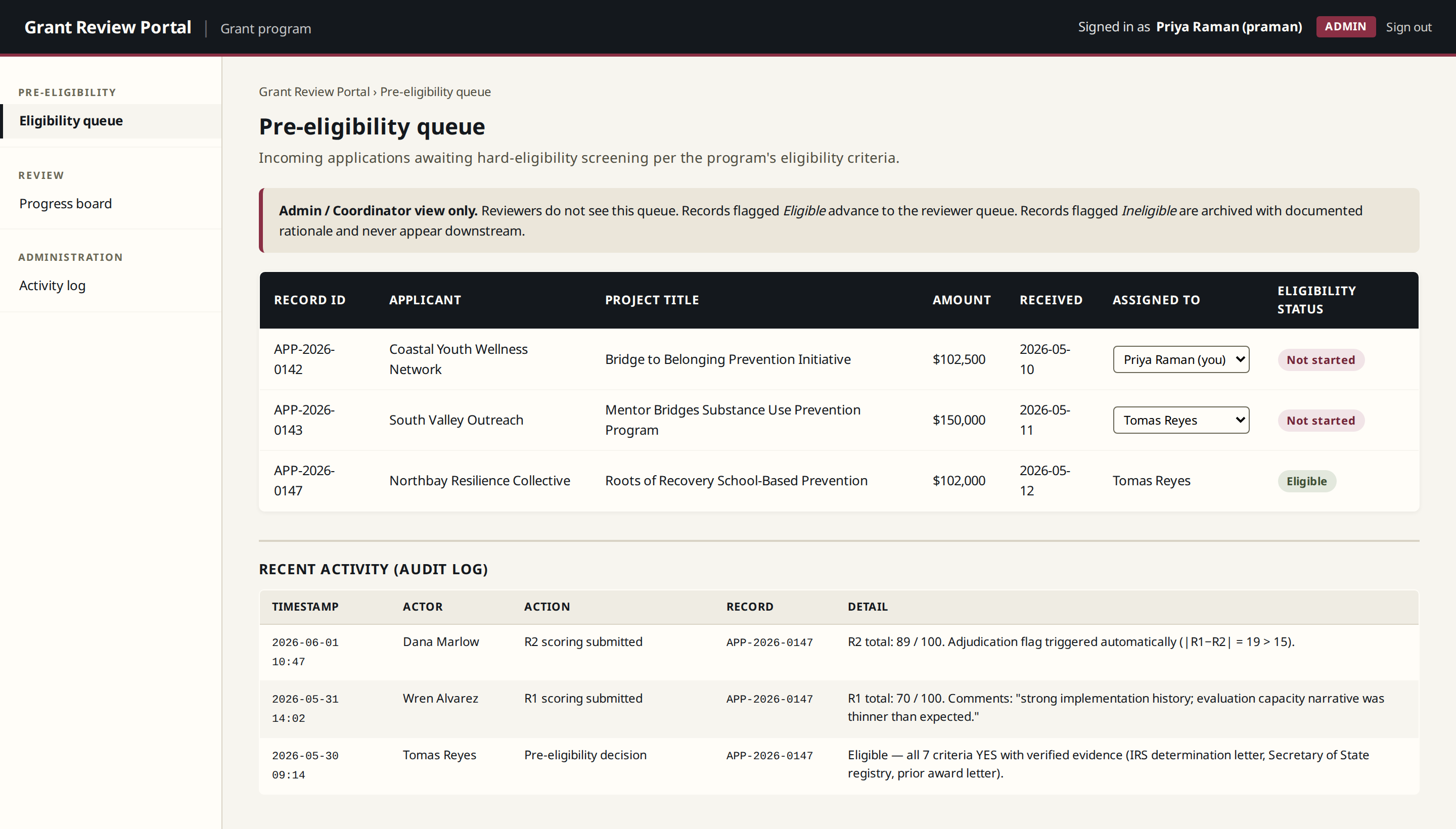
Applications arrive, get assigned, and get screened, with every decision written to an audit trail.
The practices library solves a different reading problem
County staff and youth service providers also come to SUPER looking for a prevention practice that fits the population and setting they serve. Reading every entry in sequence would make the useful information harder to reach.
Lincoln wrote the production plugins that turn those practices into a filterable library. People can narrow the collection by the factors that matter to their work, then read the evidence and details for a possible fit.
The work keeps going
Lincoln maintains the public site and handles its security updates alongside feature work. The editing surface, custom code, hosting environment, and accessibility requirements all have to keep working together after a feature ships.
The practices browser remains live, the CSSA page now records a closed application period, and the reviewer portal ran the review from screening through decision tracking. Work on the later grantee side is still in development, so this case study does not present it as a finished system.